Archives
- 2026-08
- 2026-07
- 2026-06
- 2026-05
- 2026-04
- 2026-03
- 2026-02
- 2026-01
- 2025-12
- 2025-11
- 2025-10
- 2025-09
- 2025-04
- 2025-03
- 2025-02
- 2025-01
- 2024-12
- 2024-11
- 2024-10
- 2024-09
- 2024-08
- 2024-07
- 2024-06
- 2024-05
- 2024-04
- 2024-03
- 2024-02
- 2024-01
- 2023-12
- 2023-11
- 2023-10
- 2023-09
- 2023-08
- 2023-07
- 2023-06
- 2023-05
- 2023-04
- 2023-03
- 2023-02
- 2023-01
- 2022-12
- 2022-11
- 2022-10
- 2022-09
- 2022-08
- 2022-07
- 2022-06
- 2022-05
- 2022-04
- 2022-03
- 2022-02
- 2022-01
- 2021-12
- 2021-11
- 2021-10
- 2021-09
- 2021-08
- 2021-07
- 2021-06
- 2021-05
- 2021-04
- 2021-03
- 2021-02
- 2021-01
- 2020-12
- 2020-11
- 2020-10
- 2020-09
- 2020-08
- 2020-07
- 2020-06
- 2020-05
- 2020-04
- 2020-03
- 2020-02
- 2020-01
- 2019-12
- 2019-11
- 2019-10
- 2019-09
- 2019-08
- 2019-07
- 2019-06
- 2019-05
- 2019-04
- 2018-07
-
Although no data exist on Ptc gene expression in
2021-10-23
Although no data exist on Ptc52 gene Dasatinib Monohydrate sale in other plant species, the expression pattern presented in this study shows perceptibly low levels of transcript accumulation in tomato seeds and roots, low levels in the stem, flower and green fruit, and high levels in the leaves. Th
-
br Introduction Chronic hepatitis C CHC caused by hepatitis
2021-10-23
Introduction Chronic hepatitis C (CHC) caused by hepatitis C virus (HCV) infection affects approximately 170 million individuals worldwide [1]. HCV and human immunodeficiency virus (HIV) have similar routes of transmission, including blood-to-blood contact, sharing of injection equipment, and sex
-
Several compounds have been described in the literature as
2021-10-23

Several compounds have been described in the literature as inhibitors of the sGC. Among them, methylene blue and LY83583 () are not direct sGC inhibitors, but rather block cGMP formation by generating superoxide anion radicals that deactivate NO. Despite their extensive use in plethora of research s
-
Hypoxia has been shown to affect miR expression that
2021-10-23
Hypoxia has been shown to affect miR-155 expression that can induce autophagy in nasopharyngeal and cervical carcinoma cells [334]. Suppression of miR-155 inhibited hypoxia-induced autophagy. miR-155 targeted mRNAs involved in the PI3K/PTEN/Akt/mTORC1 pathway including: Ras homolog enriched in Z VDV
-
br Concluding remarks Several orphan GPCRs
2021-10-23
Concluding remarks Several orphan GPCRs have expression profiles that indicate they are worthy of consideration as therapeutic targets. This view can be supported via various transgenic techniques, and it would be interesting to have wide-ranging phenotypic information on GPR35 knockout mice. Bas
-
br Experimental procedure br Acknowledgments
2021-10-23
Experimental procedure Acknowledgments This research was supported by funds provided by NIH/NIAAA grant P01 AA020683 and the Waggoner Center for Alcohol and Addiction Research. Introduction Acute mesenteric ischemia (AMI) is still associated with a high mortality rate, and currently, an e
-
Contradictory results have been described regarding the role
2021-10-23
Contradictory results have been described regarding the role of the Shh pathway during vertebrate skeletal myogenesis. Different studies have shown that Shh can increase or inhibit myoblasts proliferation and terminal muscle differentiation, depending on the experimental model [[1], [2], [3], [4], [
-
br Mechanisms of gap junction internalization disaggregation
2021-10-23
Mechanisms of gap junction internalization: disaggregation, endocytosis and annular gap junctions It has been clearly shown that gap junction internalization can occur by a distinctive mechanism where one cell internalizes an entire gap junction via formation of double membrane structure termed a
-
br GJs in the brain br Alterations of GJs in
2021-10-23
GJs in the brain Alterations of GJs in epilepsy The role of GJ blockers and openers in epilepsy As previously known, GJ-mediated electrical coupling plays a role in the generation of highly synchronous electrical activity. The hypersynchronous neuronal activity is a significant feature of c
-
GSIs were shown to effectively decrease A levels
2021-10-23
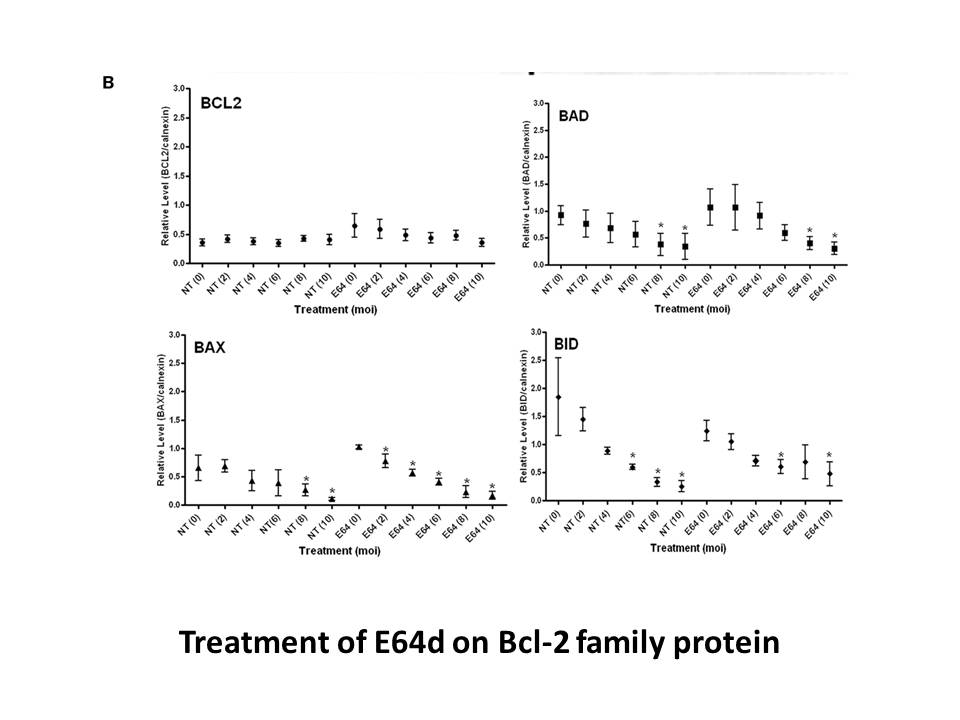
GSIs were shown to effectively decrease Aβ levels at doses close to or higher than their IC50 values in cell culture models. Surprisingly, they also slightly increase Aβ levels at low doses, (significantly below the IC50) also known as “Aβ rise”, due to various mechanisms including inhibition of cel
-
Inflammasomes are multimeric protein complexes involved in t
2021-10-23
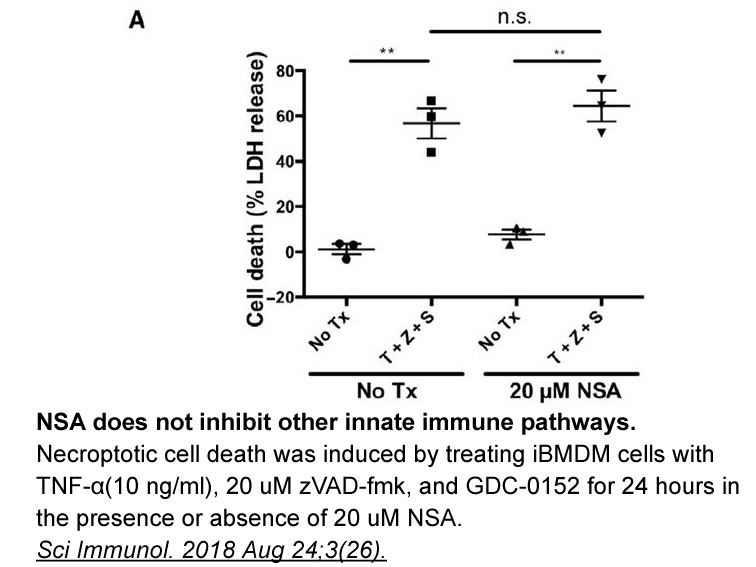
Inflammasomes are multimeric protein complexes involved in the host defense protecting activity against invading pathogens and in physiological aberrations such as cancer and auto-inflammatory, metabolic, and neurodegenerative diseases. Inflammasomes induce the inflammatory process by triggering the
-
Stimulation of FPR by bacterial N formyl
2021-10-23
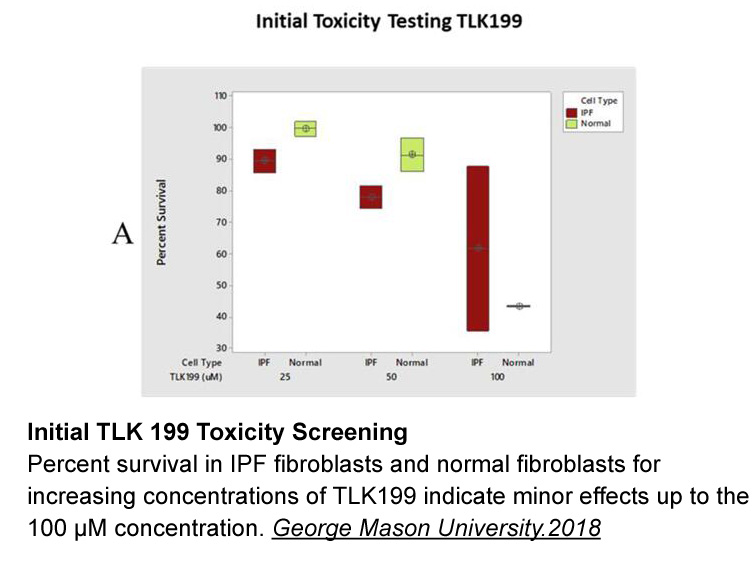
Stimulation of FPR by bacterial N-formyl peptides induces basophil and mast Cy5 NHS ester(Et) release of immunogenic compounds such as histamine [21], [31]. Furthermore, we demonstrated that histamine plays a role in F-MITs-induced sepsis-like symptoms since cimetidine, a histamine H2-receptor antag
-
The results of our analysis of Fas
2021-10-22
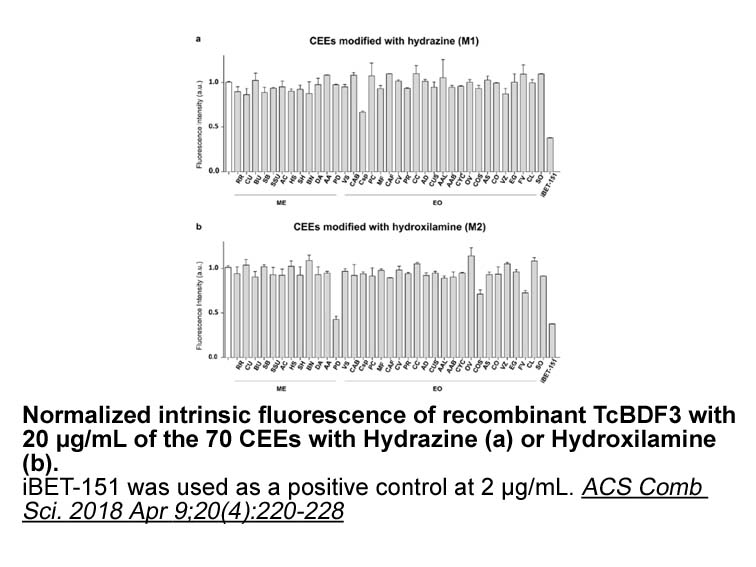
The results of our analysis of Fas alleles, Fas 670 A>G, FasL alleles, and FasL IVS2nt 124 A>G for cases and controls are shown in Table 2. For Fas 670, we found statistically significant differences between the two groups regarding the AA aspartame products mg (P=0.040) and GG/AG (P=0.040) as well
-
Here we showed that microinjection of siRNA
2021-10-22
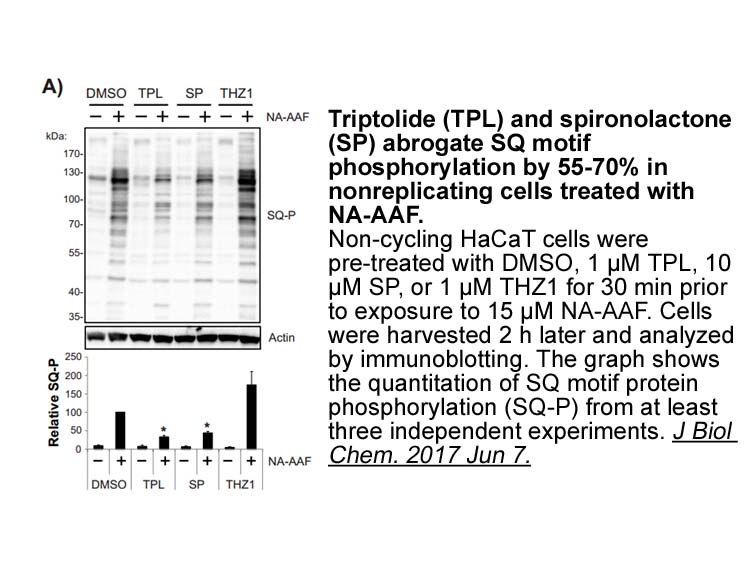
Here we showed that microinjection of siRNA at the MII stage efficiently reduced endogenous EZH2 mRNA and protein. Although the percentage of cleaving embryos was not affected, Cathepsin Inhibitor 1 formation and blastocyst cell number were both reduced in EZH2 knockdown groups (Table 1). Similar r
-
Dapoxetine HCl More direct evidence of a role
2021-10-22
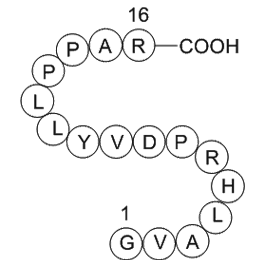
More direct evidence of a role for Hat1 in the acetylation of newly synthesized histone H4 has come from a number of recent studies that have shown that Hat1 is responsible for at least a portion of the acetylation that occurs on histone H4 lysines 5 and 12 in the pool of cytosolic histones. In chic
16822 records 617/1122 page Previous Next First page 上5页 616617618619620 下5页 Last page